Stoneware, White Porcelain, or Celadon: Which Ceramic Material is Best for Your Tea?
Have you ever brewed the exact same tea leaves in two different cups and noticed they tasted like entirely different beverages?
It’s not your imagination. In the art of tea brewing, there is an ancient saying: “The vessel is the mother of tea.” While the quality of your tea leaves and water temperature matter, the ceramic material of your teapot or cup plays a silent, crucial role in shaping the aroma, texture, and flavor profile of your brew.
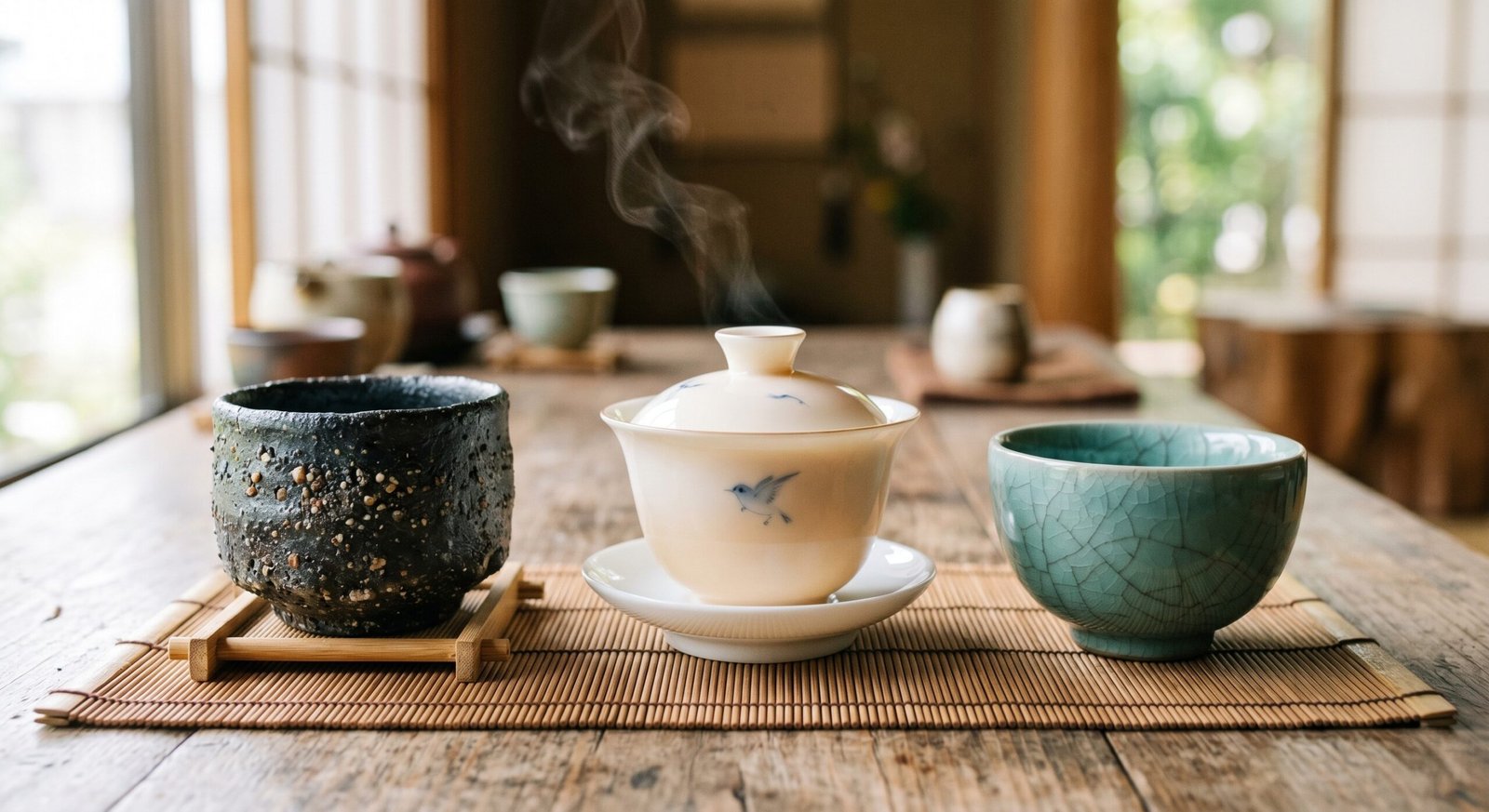
Today, we will break down the science behind the three most iconic ceramic materials—Stoneware , White Porcelain , and Celadon—so you can match the perfect vessel to your favorite daily brew.
The Science of Tea Vessels: Porosity and Thermal Conductivity
To understand why different ceramics affect tea flavor, we need to look at two physical properties:
- Porosity: Unglazed or partially glazed clays have microscopic pores that absorb tiny flavor molecules and soften harsh water minerals. Highly vitrified, fully glazed porcelains are completely non-porous, meaning they reflect 100% of the tea’s natural flavor.
- Thermal Conductivity: Thick, coarse clays retain heat for a long time, making them ideal for heavy oxidation teas. Thin porcelain cools down faster, preventing delicate, unoxidized leaves from stewing and turning bitter.
1. Stoneware : The Earthy Flavor Softener
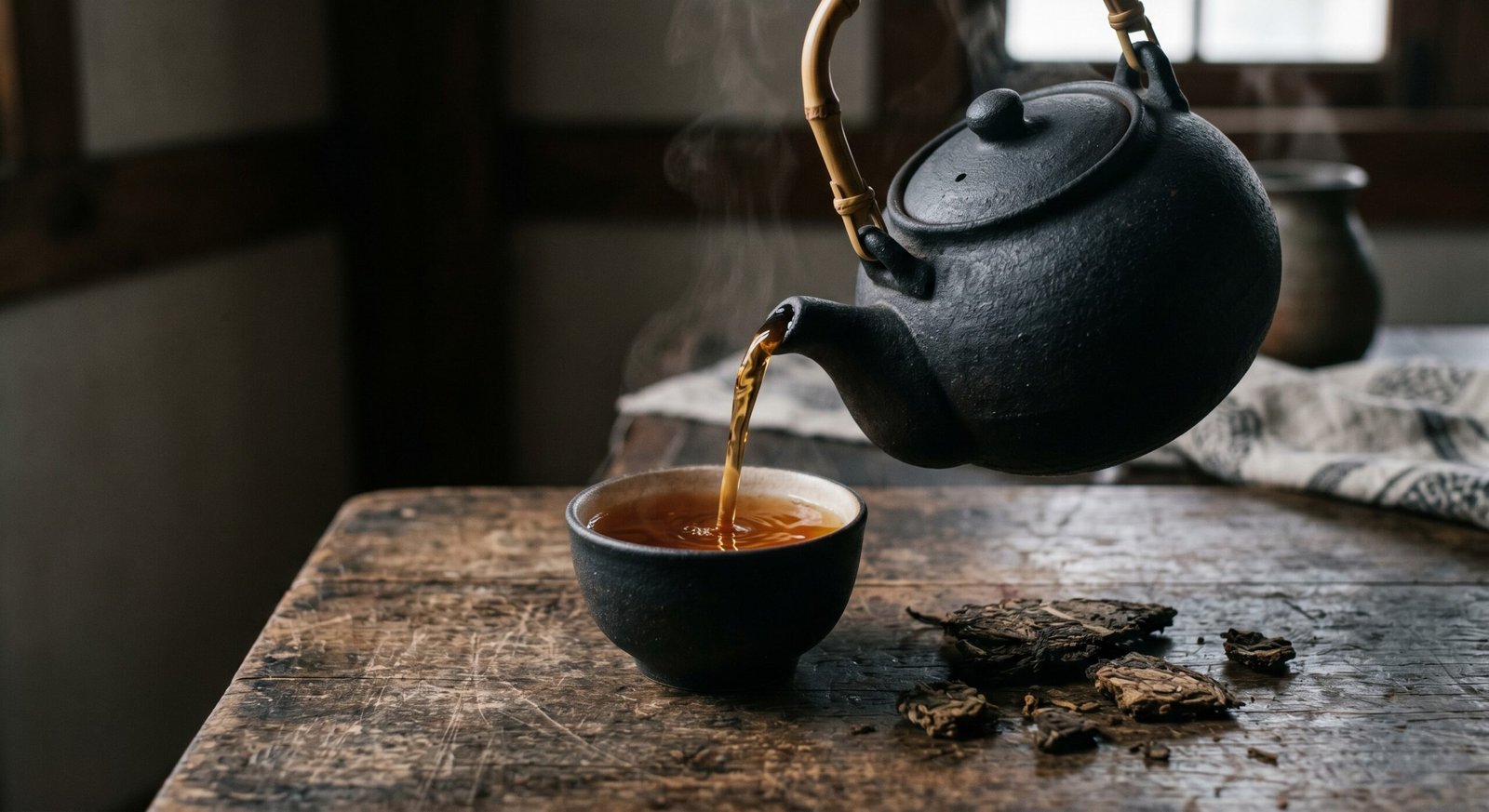
Stoneware is crafted from clay rich in iron and natural mineral sands, usually fired at a slightly lower temperature than porcelain, leaving the body with rich microscopic air pores.
- The Flavor Impact: The porous nature of stoneware acts as a natural filter. It rounds off the sharp, bitter, or astringent edges of heavily roasted or aged teas, making the tea soup feel noticeably thicker, smoother, and sweeter on the palate.
- Heat Retention: Excellent. It locks in high temperatures, ensuring the complex compressed leaves open up completely.
- Best Paired With: Aged Pu-erh, heavily roasted Rock Tea, and dark teas.
2. White Porcelain : The Honest Flavor Mirror
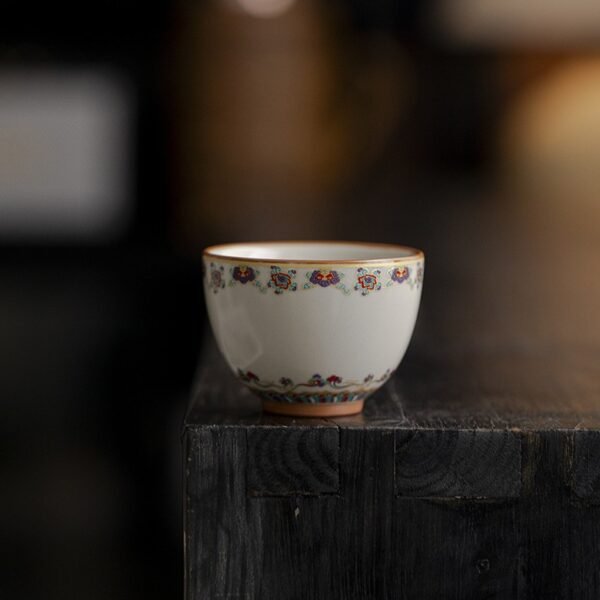
White porcelain is fired at extreme temperatures (above 1300°C) using pure kaolin clay. It is dense, glassy, totally non-porous, and rings with a clear, bell-like sound when tapped.
- The Flavor Impact: White porcelain is completely neutral and “honest.” Because its glaze has zero porosity, it absorbs absolutely nothing. It mirrors the exact aroma and flavor profile of your tea leaves—flaws and virtues alike. It is the ultimate tool for evaluating the true quality of a tea.
- Visual Advantage: The bright white interior offers the perfect canvas to appreciate the true color of the tea liquor, from the vibrant emerald of green tea to the pale gold of white tea.
- Best Paired With: Delicate Green Tea (绿茶), White Tea (白茶/银针), and highly aromatic Floral Oolongs (如单丛、铁观音).
3. Celadon : The Elegant Visual Jade
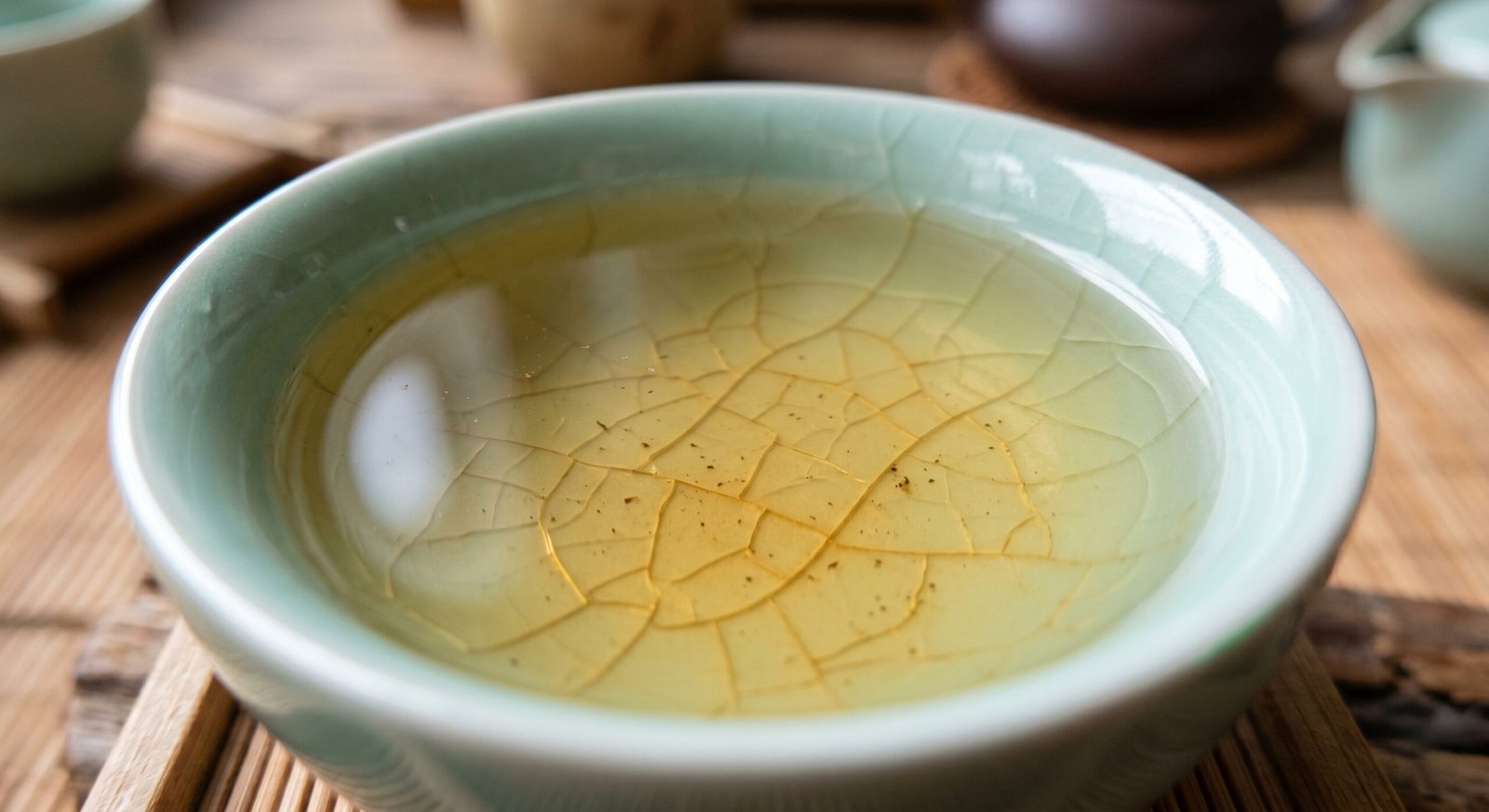
Celadon is a magnificent bridge between porcelain and jade. Invented in ancient China to mimic the royal stone, its iron-rich glaze creates a thick, translucent blue-green coating that often develops beautiful “crackles” (开片) over time.
- The Flavor Impact: Built on a dense porcelain base but covered in a thick iron glaze, celadon balances neutrality with a gentle softening effect. It keeps aromatic teas bright while giving the texture a slightly smoother, silkier body.
- The Aesthetic Ritual: Drinking from a celadon cup is a visual meditation. As the amber tea fills the jade-colored cup, the liquid looks incredibly soft and deep, elevating the ritualistic pleasure of your tea session.
- Best Paired With: High-mountain Light Oolong (高山乌龙), Jasmine Tea, and premium Green Teas.
Summary Cheat-Sheet: Match Your Tea to the Vessel
To make your selection easier, here is our quick-match guide:
| If You Are Brewing… | Choose This Material | Why It Works |
| Silver Needle White Tea / Gyokuro Green Tea | White Porcelain | Keeps it fresh; prevents the delicate leaves from overheating and cooking. |
| Dancong Oolong / Darjeeling Second Flush | White Porcelain / Celadon | Retains high floral and fruit aromatics without altering the flavor profile. |
| Aged Pu-erh / Roasted Dahongpao | Stoneware | Absorbs bitterness, softens harshness, and enhances the sweet, earthy finish. |
☕ Frequently Asked Questions (FAQ)
Q1: Can I use one stoneware cup for all types of tea?
A: If the stoneware cup is fully glazed on the inside, yes. However, if the interior is unglazed (raw clay), the microscopic pores will season over time, absorbing the oils of the tea you brew. We highly recommend dedicating an unglazed stoneware vessel to one specific category of tea (like dark teas or roasted oolongs) so flavors don’t clash.
Q2: Why does my celadon cup have tiny cracks? Is it broken?
A: Not at all! This is a deliberate art form known as “Crackle Glaze”. It happens because the clay body and the glaze expand and contract at different rates during cooling. These lines are completely sealed beneath the glass surface, making it 100% structurally sound. Over months of use, tea tannins will safely stain these lines, creating a beautiful, personalized pattern that “grows” with you.
Q3: Does white porcelain stain easily from tea? How do I clean it?
A: Because porcelain glaze is extremely smooth and non-porous, tea stains only sit on the absolute surface. They look obvious against the white backdrop but are incredibly easy to remove. Simply wipe gently with a little baking soda and warm water, and it will restore to its pristine, snow-white brilliance instantly without chemical damage.
Find Your Perfect Vessel: Every tea has a soul, and every soul deserves the right home. Discover our meticulously crafted [Earthy Stoneware Teapots] for your dark roasts, and our [Jade-Glazed Celadon Cups] for your fragrant weekend pours. Bring the harmony of nature back into your tea rituals today.