
Handmade vs. Mass-Produced Ceramics: Why Your Next Coffee Cup Should Be Handcrafted
When you holding your morning coffee or sipping a warm cup of oolong tea, have you ever looked closely at the cup in your hand?
In an era dominated by industrial speed, our kitchens and coffee tables are flooded with identical, factory-stamped mugs. They are cheap, uniform, and flawless—yet they often feel soulless. On the other end of the spectrum lies handcrafted ceramics, filled with the warmth of the artisan’s hands and the unpredictable magic of the kiln.
But what exactly is the difference between handmade and mass-produced ceramics? Is it truly worth investing in a studio-made piece?
Let’s dive deep into the tangible and intangible differences across 5 core dimensions to help you choose the perfect vessel for your daily rituals.

The Ultimate Comparison: Handcrafted vs. Factory-Made
Before we explore the details, here is a quick reference table comparing the two worlds:
| Dimension | Handcrafted Ceramics (Artisan Studio) | Mass-Produced Ceramics (Factory) |
| Production Method | Potter’s wheel (throwing), hand-building, slip-casting | High-pressure machine molding, automated stamping |
| Material Quality | High-firing stoneware/porcelain, rich mineral glazes | Low-firing clay blends, synthetic/uniform chemical glazes |
| Visual Appearance | Subtle variations in glaze, unique organic textures | Identical shape, flat color, flawlessly uniform |
| Tactile Experience | Ergonomic, balanced weight, visible artisan fingerprint | Lightweight or unnaturally heavy, sharp machine edges |
| Sustainability & Value | Low carbon footprint, durable, heirloom investment value | High industrial waste, easily replaceable, disposable |
1. Craftsmanship & Production: The Human Touch vs. Machine Precision
Mass-Produced Ceramics
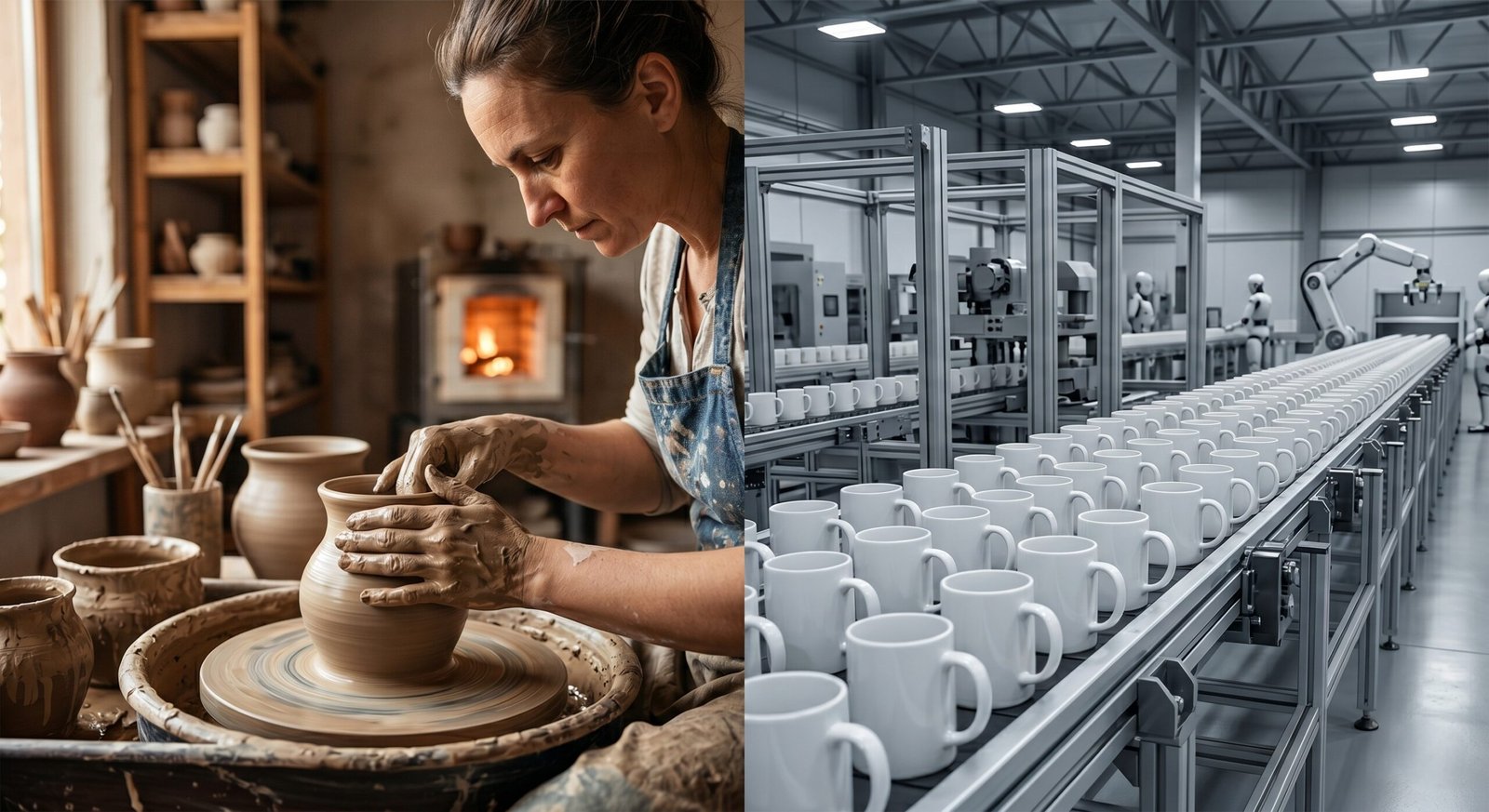
In a factory setting, speed and uniformity are everything. Thousands of cups are pressed into standardized molds using automated machines under intense hydraulic pressure. The process is entirely mechanical, designed to eliminate any human intervention. The result? A million mugs that look exactly like the first one.
Handcrafted Ceramics
Every handmade cup begins as a raw lump of clay. An artisan wedges the mud to remove air pockets, places it on a spinning potter’s wheel, and uses their hands to pull the walls upward.
Did you know? A single handcrafted ceramic piece goes through over 20 intricate steps—including trimming, bisque firing, glaze formulation, hand-dipping, and high-temperature kiln firing—taking anywhere from 2 to 4 weeks to complete.
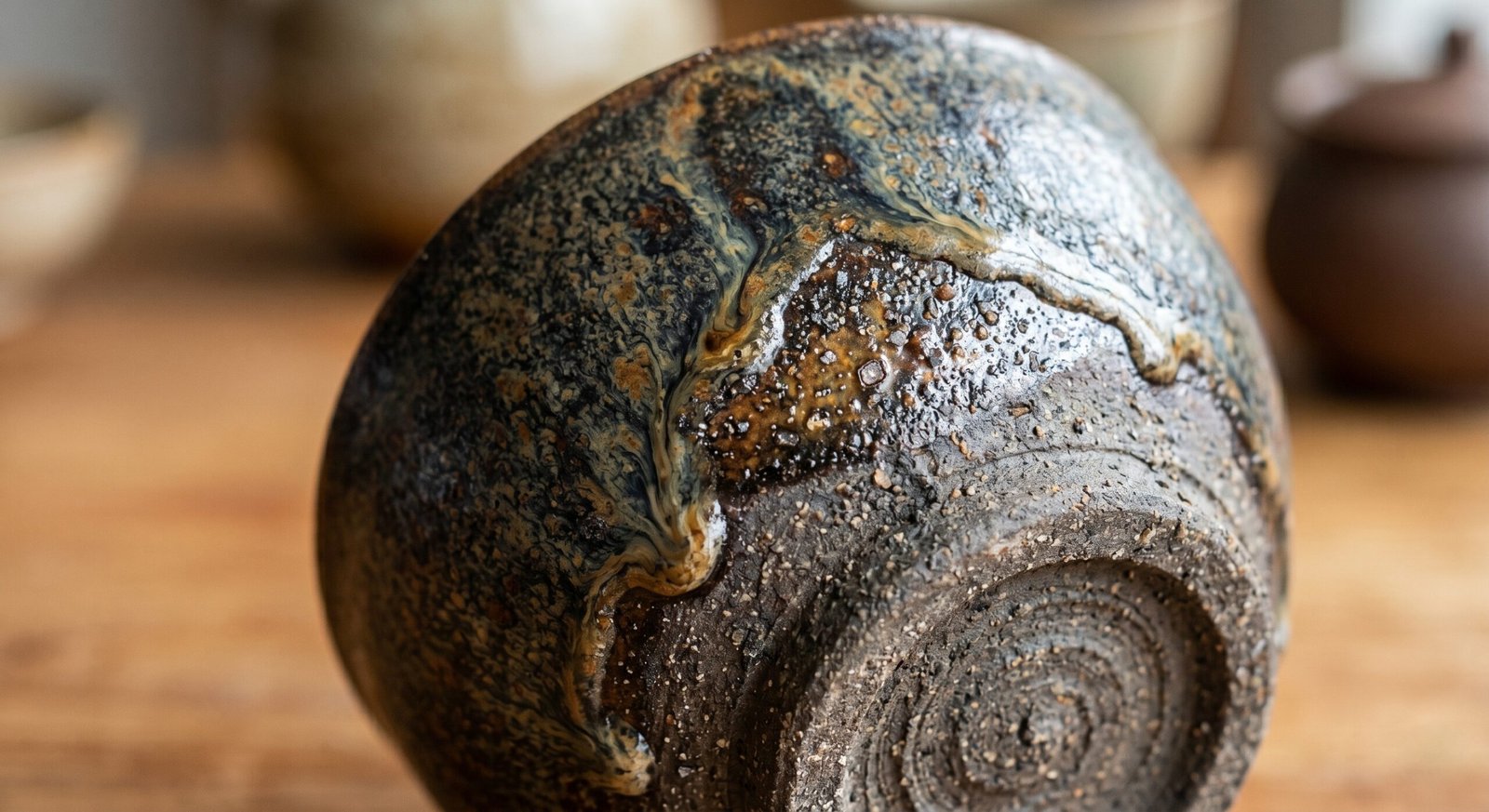
When you look at the bottom of a handcrafted mug, you might catch the subtle concentric ridges left by the potter’s fingers. It is a physical record of the time and energy poured into that single object.
2. Glaze and Texture: Natural “Kiln Transformation” vs. Flat Synthetic Color
Mass-Produced Ceramics
Factories use mass-formulated chemical glazes sprayed onto the clay by robots. While this ensures the color is perfectly consistent across a batch of 10,000 mugs, it often results in a “plastic-like” or glass-flat surface. It lacks depth and cannot reflect the organic beauty of mineral raw materials.
Handcrafted Ceramics
Independent ceramic studios often mix their own glazes using natural minerals like feldspar, wood ash, and iron oxide.
During the intense 1300°C (2372°F) high-firing process, these minerals undergo a phenomenon called “Yo-hen” (窑变 – Kiln Transformation). The fire, atmosphere, and placement inside the kiln cause the glaze to melt, flow, and interact organically. You get rich, layered textures—from the rustic, earthy feel of matte Wabi-sabi stoneware to the breathtaking, watery flow of modern color glazes. No two pieces ever emerge from the kiln looking identical.
3. Ergonomics & Tactile Sensation: The Joy of Daily Holding
A cup is not just a visual object; it is an intimate tool that touches your hands and lips multiple times a day.
- The Lip Feel: Factory mugs usually feature a thick, rounded, uniform rim that can feel bulky. Artisans carefully trim the lip of a handmade cup to a precise taper, ensuring that when you drink, the liquid flows smoothly onto your palate, enhancing the flavor notes of specialty coffee or delicate tea.
- The Handle Comfort: Machine handles are stamped and glued on, often leaving sharp seams that pinch your fingers. Hand-pulled ceramic handles are contoured to fit the natural curve of human fingers, distributing the weight of the beverage perfectly so that even a heavy rustic mug feels balanced and light in your hand.
4. Health, Safety, and Environmental Sustainability
In today’s world, what goes into your cup matters just as much as what goes into your body.
- Lead-Free and Non-Toxic: Some low-cost mass-produced ceramics are fired at low temperatures, meaning heavy metals like lead or cadmium in the glaze may not fully fuse into the clay body, posing a risk of leaching into acidic drinks like lemon tea or espresso. High-end handcrafted ceramics are fired at extreme temperatures (above 1300°C), forcing the minerals to completely vitrify, creating a 100% food-safe, non-toxic, and acid-resistant surface.
- Eco-Friendly Longevity: Handcrafted ceramics embody the “Slow Living” philosophy. Instead of buying cheap mugs that chip easily and end up in landfills, investing in a durable, high-quality handcrafted cup reduces waste. It is built to last a lifetime, becoming a beloved heirloom.
Summary: Which One Should You Choose?
If you simply need a cheap container to hold water in a high-traffic office breakroom, mass-produced ceramic mugs serve their utility well.
However, if you view your morning coffee or evening tea as a sacred ritual of mindfulness and self-care, a handcrafted ceramic vessel is unmatched. It turns a mundane daily routine into an artistic experience. When you buy a handmade mug, you aren’t just buying a cup—you are supporting an artisan’s craft, preserving ancient traditions, and bringing a piece of functional art into your modern home.
☕ Frequently Asked Questions (FAQ)
Q1: Why do handmade ceramic mugs cost more than factory mugs?
A: Factory mugs are produced in seconds using machines and cheap labor. A single handcrafted mug requires days of manual labor, precision skill, high-firing energy costs, and carries a high risk of failure in the kiln (cracking or glaze defects). You are paying for raw materials, artisan expertise, and a guaranteed unique art piece.
Q2: Are handcrafted ceramics safe for daily microwave and dishwasher use?
A: Generally, yes! Most high-fired stoneware and porcelain handmade pieces are highly durable and dishwasher safe. However, if a handcrafted piece features real gold/platinum luster accents or a delicate raw matte finish, hand washing is highly recommended to preserve its beauty over the decades. (Always check the specific care instructions provided by the studio).
Q3: Why does the color of my handmade mug look slightly different from the website photo?
A: This is the most beautiful characteristic of hand-glazed ceramics known as “Kiln Transformation.” Slight variations in kiln temperature, humidity, and mineral thickness mean each firing produces unique glaze flows. The photo represents the design, but your received cup is an exclusive, one-of-a-kind version tailored just for you.
Explore Our Collection: Ready to elevate your daily coffee and tea rituals? Browse our latest curated collection of [Modern Zen Handcrafted Ceramic Mugs & Teaware]—each piece individually thrown, glazed, and fired to bring quiet luxury into your living space.
-
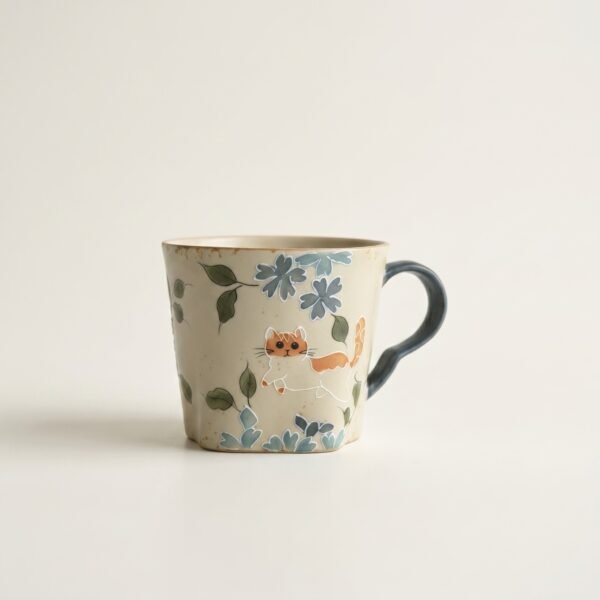
frolicking orange cat
$34.99 -
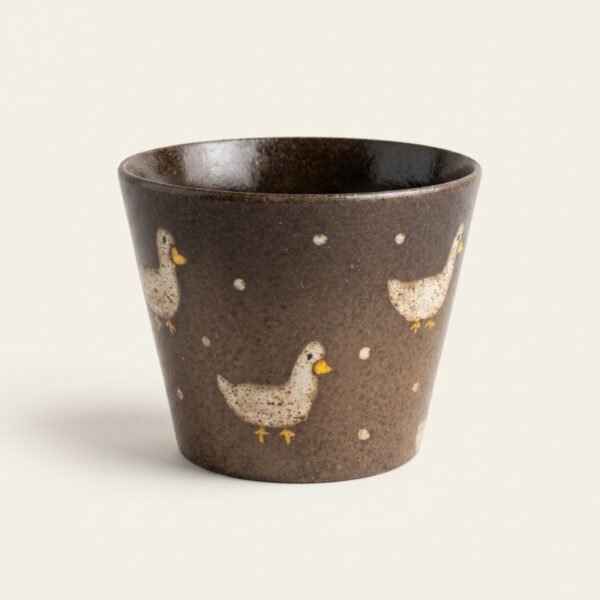
White Duck
$29.99 -
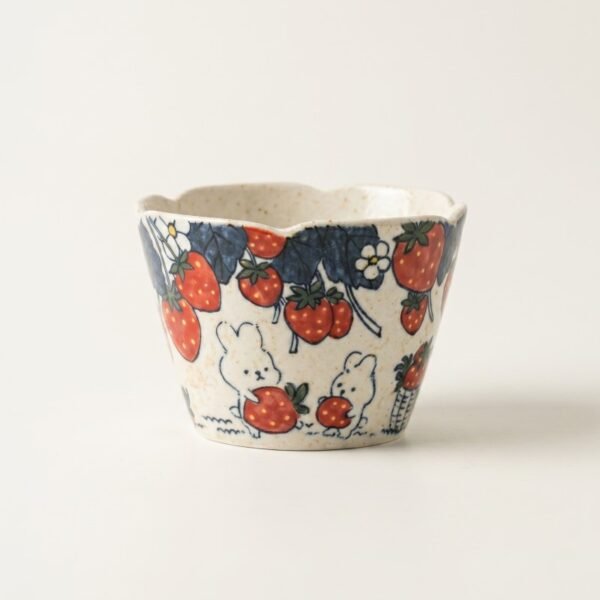
Strawberry Bunny
$44.99 -
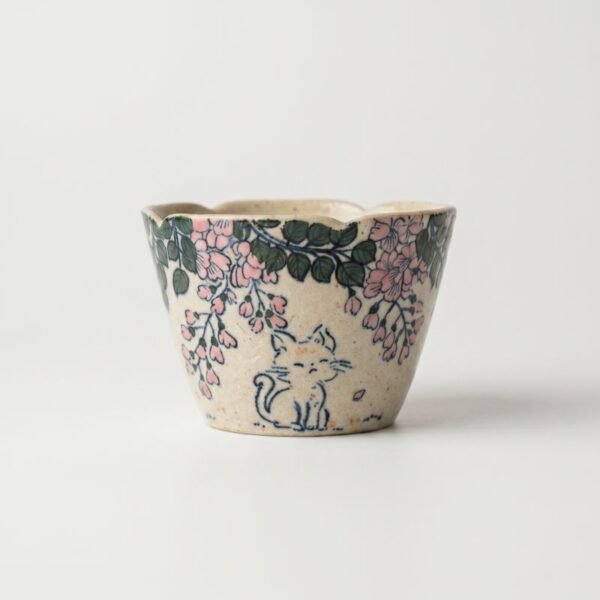
Sakura Cat
$44.99