
Introduction
In the long scroll of human civilization, ceramics stand out as one of the most representative material legacies. It is not merely a crystallization of clay and fire, but a convergence point of science, art, and philosophy. When we hold a teacup or a coffee cup, what our fingertips touch is not just a warm glaze, but a cultural heritage and physical miracle spanning thousands of years. This article delves into the firing processes, historical evolution, material characteristics, and aesthetic value of ceramic tea sets in modern life, revealing the profound mysteries behind this “dance of clay and fire.”
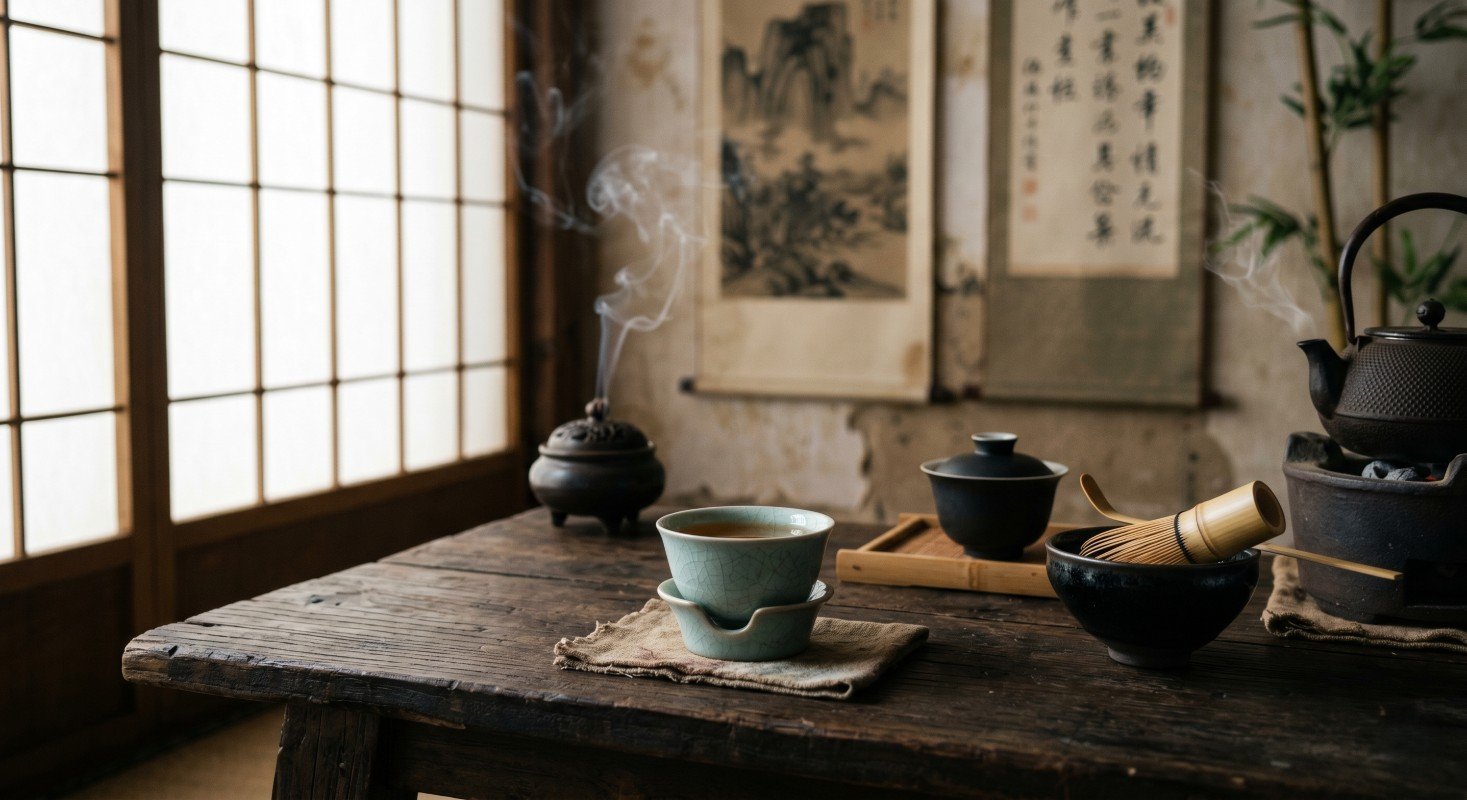
Historical Origins: From Practical Utensils to Cultural Carriers
China is the homeland of ceramics, and its development history is almost synonymous with the history of Chinese civilization. As early as the Neolithic Age (c. 10,000 BC – 2,000 BC), ancestors discovered the plasticity of clay and its hardness after sintering, creating the earliest pottery. However, it was the evolution of subsequent dynasties that pushed ceramic art to its peak.
During the Tang Dynasty (618–907 AD), with the rise of tea drinking culture, tea sets began to emerge as distinct items from daily utensils. Lu Yu, in his “Classic of Tea,” praised the celadon of Yue Kiln, describing it as “jade-like” and “ice-like,” significantly elevating the cultural status of celadon. By the Song Dynasty (960–1279 AD), ceramic art had reached the zenith of aesthetics. The Five Great Kilns—Ru, Guan, Ge, Jun, and Ding—each possessed unique characteristics. The pursuit of the sky-blue Ru porcelain by Emperor Huizong of Song reflected the elegant aesthetic of Song scholars, captured in the phrase “the sky blue after rain, where the clouds break.”
The Ming Dynasty (1368–1644 AD) witnessed the rise of Zisha (purple clay) teapots and the maturity of blue-and-white porcelain. Zisha, with its unique double-pore structure, perfectly enhances the aroma of tea, becoming a favorite among literati and scholars. The Qing Dynasty (1644–1912 AD) achieved breakthroughs in glaze technology. Colorful porcelains such as Famille Rose and Enamel not only satisfied the luxurious demands of the imperial court but were also exported to Europe via the Silk Road, profoundly influencing the development of world ceramics and even catalyzing the emergence of the local bone china industry in Europe.
Scientific Analysis: Glaze Chemistry and Kiln Transformation Mechanisms
The charm of ceramics largely stems from their unpredictable glaze colors. This is not a simple application of pigment, but a complex chemical reaction.
Clay Body and Kaolin
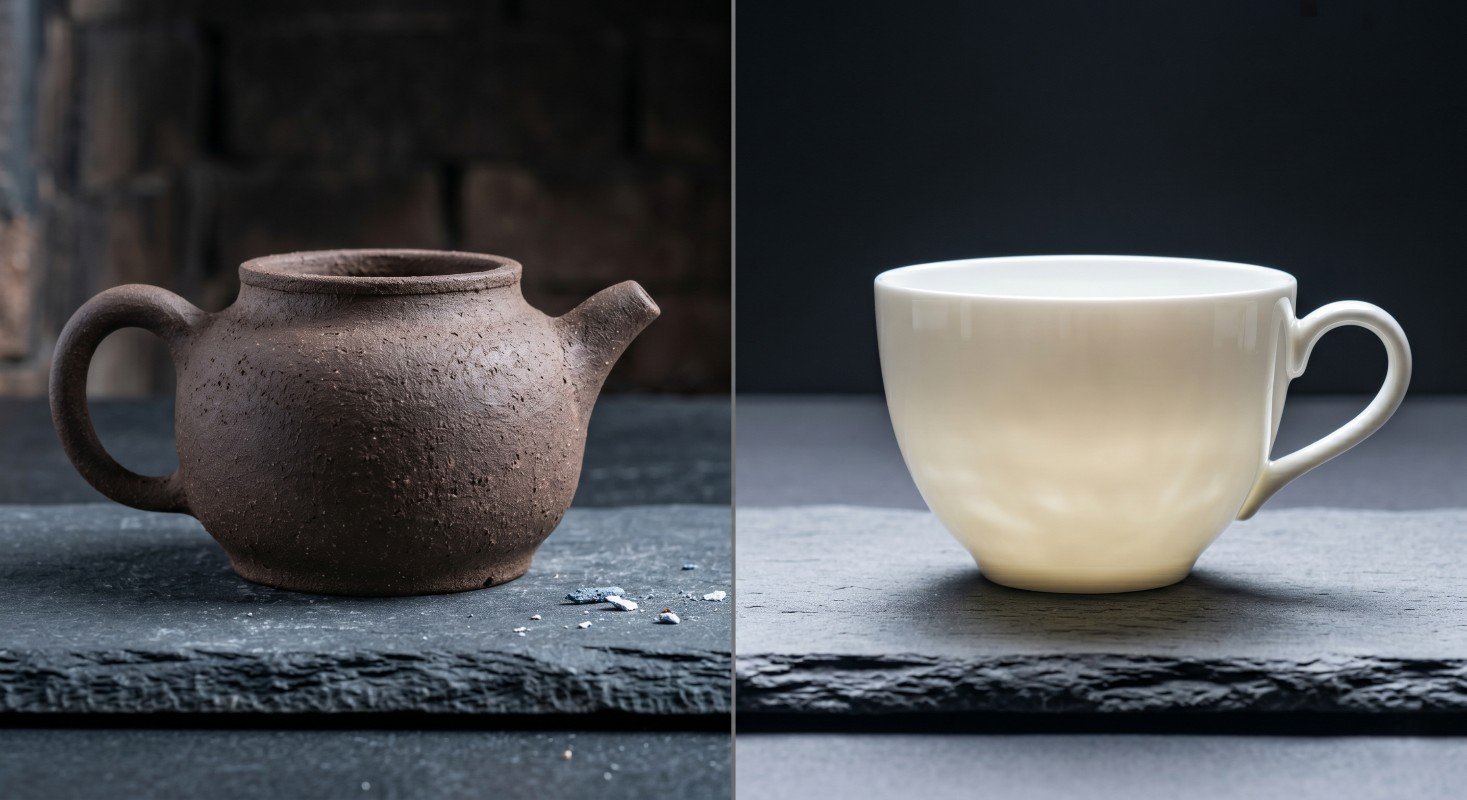
The fundamental difference between pottery and porcelain lies in the raw materials and firing temperatures. Pottery mostly uses ordinary clay, which contains many impurities and is fired at temperatures typically between 800–1,100°C. Porcelain, on the other hand, must use Kaolin, whose main components are silicon dioxide (SiO₂) and aluminum oxide (Al₂O₃). Kaolin has a high refractoriness. At high temperatures of 1,200–1,400°C, the quartz and feldspar in the body melt to form a glassy phase, giving porcelain its dense, translucent, and clear-sounding physical characteristics when struck [1].
The Chemical Code of Glaze Colors
Glaze is essentially a glassy layer covering the surface of the body. Its color mainly depends on the coloration reaction of metal oxides at high temperatures:
- Iron (Fe): Appears yellow or brown in an oxidizing atmosphere, and greenish-blue in a reducing atmosphere (such as celadon).
- Copper (Cu): Appears green in an oxidizing atmosphere, but can produce brilliant reds in a strong reducing atmosphere (such as Jun Red and Lang Kiln Red).
- Cobalt (Co): Is the only metal element that can stably present blue at high temperatures, achieving the glory of blue-and-white porcelain during the Yuan, Ming, and Qing dynasties.
Kiln Transformation: The Abstract Art of Flame
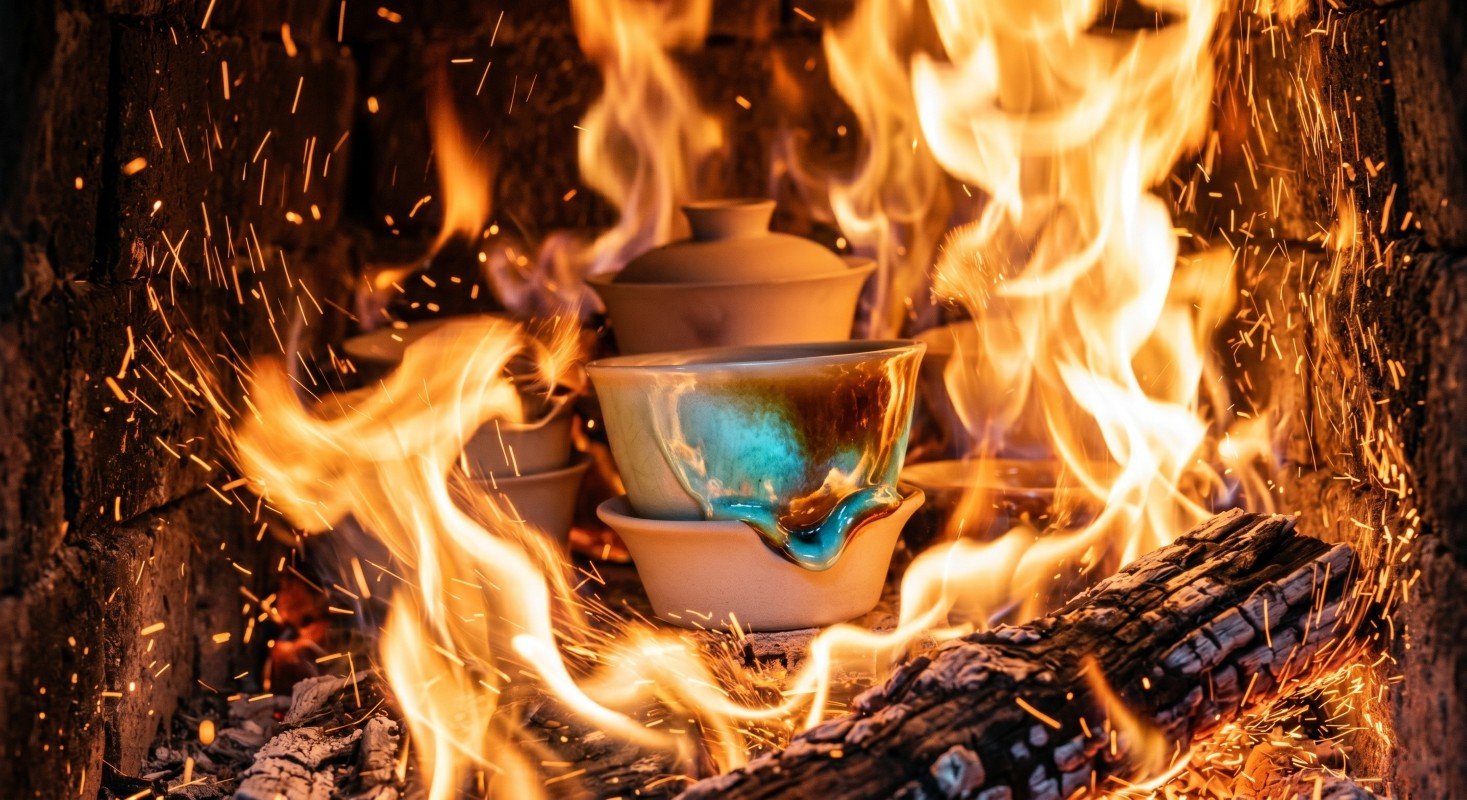
“Yao Bian” (Kiln Transformation) refers to the unpredictable natural changes in glaze color caused by subtle changes in temperature and atmosphere (oxidizing or reducing) inside the kiln during the firing process [2]. The ancients said, “One color enters the kiln, ten thousand colors emerge,” vividly describing kiln transformation. Modern science indicates that kiln transformation is caused by the migration, crystallization, and liquid-liquid phase separation of different metal ions in the glaze at high temperatures. For example, the “earthworm-mud-trail pattern” in Jun porcelain is a unique crazing and flowing trace produced by tension differences in the glaze layer during cooling [4].
Appreciation Guide: Aesthetics of Crazing and Acoustic Characteristics
Appreciating a ceramic tea set involves not only looking at its shape but also listening to its sound and observing its patterns.
The Beauty of Crazing
Crazing, or glaze cracks, was originally a defect in the firing process (caused by the different expansion coefficients of the body and glaze). However, in the hands of the Ge Kiln during the Song Dynasty, it became an ultimate aesthetic. Golden threads and iron wires, hundred-extreme fragments, and fish-roe patterns—these fine cracks become clearer under the infiltration of tea soup, endowing the object with a beauty intertwined with imperfection and time.
Acoustic and Thermal Characteristics
High-quality porcelain produces a clear and lingering sound when struck, due to its dense body and high degree of vitrification. In terms of thermal performance, Zisha teapots, due to their special double-pore structure, have a low thermal conductivity, making them comfortable to hold without burning hands. They are also breathable but impermeable, keeping the tea aroma from dissipating. In contrast, Bone China, due to the addition of animal bone ash, has extremely high translucency and strength, but its heat retention is slightly inferior to Zisha, making it more suitable for brewing green or black teas with high-aroma profiles.
Modern Fusion: Traditional Craftsmanship and Contemporary Design
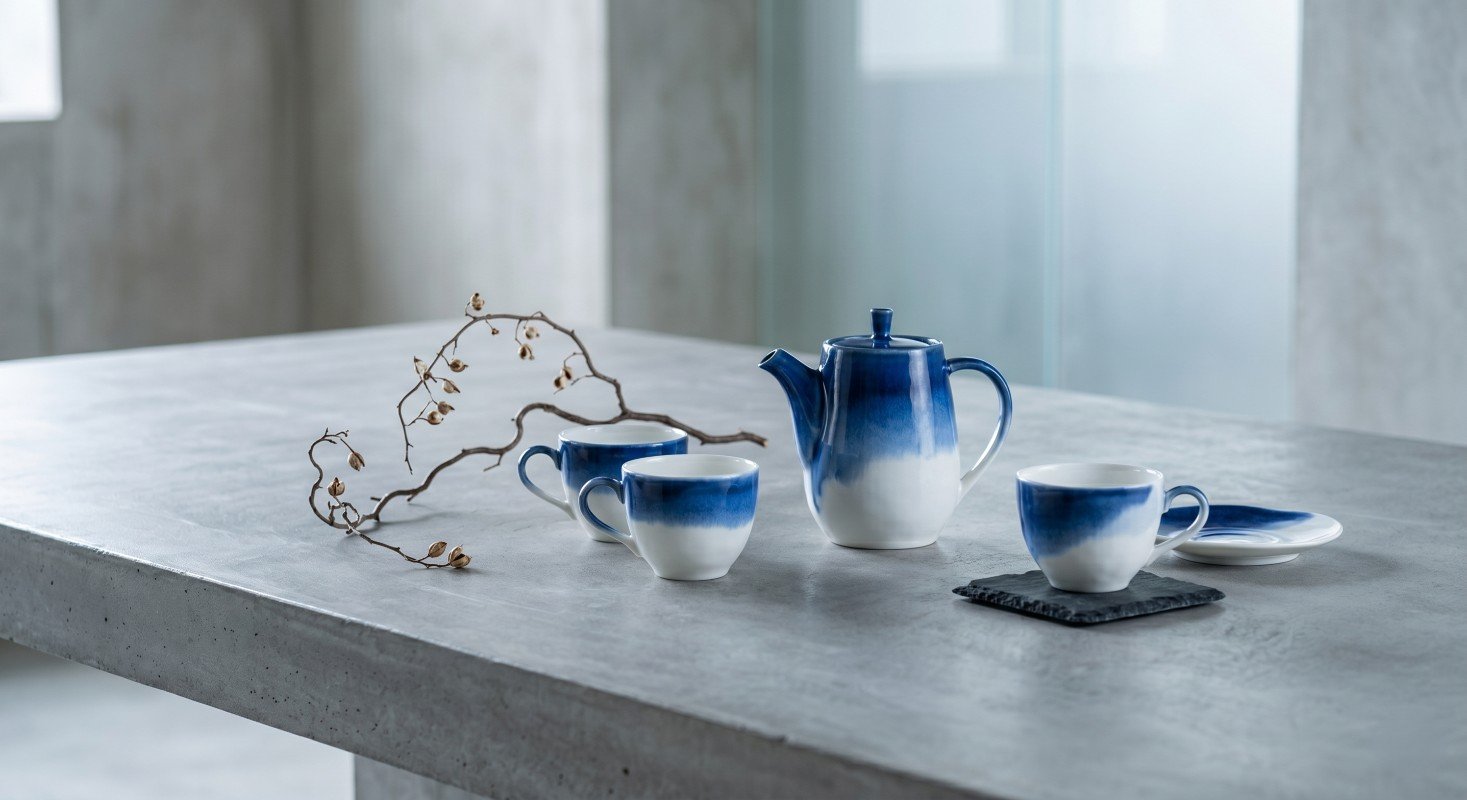
In modern design, ceramic tea sets are undergoing a renaissance. Designers are no longer limited to traditional shapes but combine minimalism, ergonomics, and traditional glaze colors. For instance, 3D printing technology is used to explore complex ceramic structures, or nanoscale glaze particles are controlled to achieve functional surfaces such as self-cleaning and antibacterial properties.
At the same time, the skills of traditional kilns are being rediscovered. Young ceramic artists in Jingdezhen are attempting to combine traditional wood-firing techniques with modern aesthetics, pursuing a “Wabi-sabi” beauty that is rustic and natural, carrying the breath of smoke and fire. This trend is not only a tribute to tradition but also a reflection and balance against modern industrial production.
Conclusion
Ceramic tea sets are an epic of clay reborn in fire. From the jade-like celadon of the Tang Dynasty (618–907 AD) to the minimalist perfection of the Song Dynasty (960–1279 AD), and now to diverse innovations, they carry not just beverages, but a lifestyle and cultural confidence. When we deeply understand the scientific principles and historical context behind them, every lift of the cup feels like a silent dialogue with craftsmen from a thousand years ago.