
Introduction: The Chemical Symphony of Fire and Earth
In the long scroll of human civilization, porcelain is undoubtedly one of the most enchanting strokes of Oriental charm. It is not merely a vessel for food and drink but a crystallization of science and art colliding under high temperatures. When we gaze at a piece of jade-like celadon or the colorful Jun ware, we see not only the ingenuity of craftsmen but also a grand experiment involving silicate chemistry, mineralogy, and thermodynamics. This article provides a deep analysis of how porcelain transforms from ordinary clay into “white gold” from three dimensions: material science, historical evolution, and technological principles.
The Mystery of Materials: The Binary Formula of Kaolin
The birth of porcelain is primarily attributed to a special mineral—Kaolin. Named after Gaoling Village in Jingdezhen, Jiangxi Province, China, this clay is the core element that distinguishes porcelain from pottery [1].
1. The Revolution of the Binary Formula
Before the Song Dynasty (960–1279 AD), Chinese ceramics mostly used single-clay bodies. However, with deepening knowledge of materials, Jingdezhen craftsmen creatively invented the “binary formula”: mixing Kaolin (rich in alumina, known as “Gengmi soil,” hard in nature) with Porcelain Stone (rich in silica, known as “Nuomi soil,” soft in nature) in specific proportions [2].
- Scientific Principle: The alumina (Al₂O₃) in Kaolin significantly increases the refractoriness of the body, preventing deformation at temperatures above 1300°C. Meanwhile, the feldspar in Porcelain Stone melts at high temperatures to form a glassy phase, filling the gaps between particles and giving porcelain its dense texture and translucent quality.
- Physical Characteristics: This formula endows porcelain with four famous features: “white as jade, bright as a mirror, thin as paper, and sounding like a chime.” Its water absorption rate is typically below 0.5%, far lower than that of pottery, thus possessing high hygiene and durability.
2. The Chemical Magic of Glazes
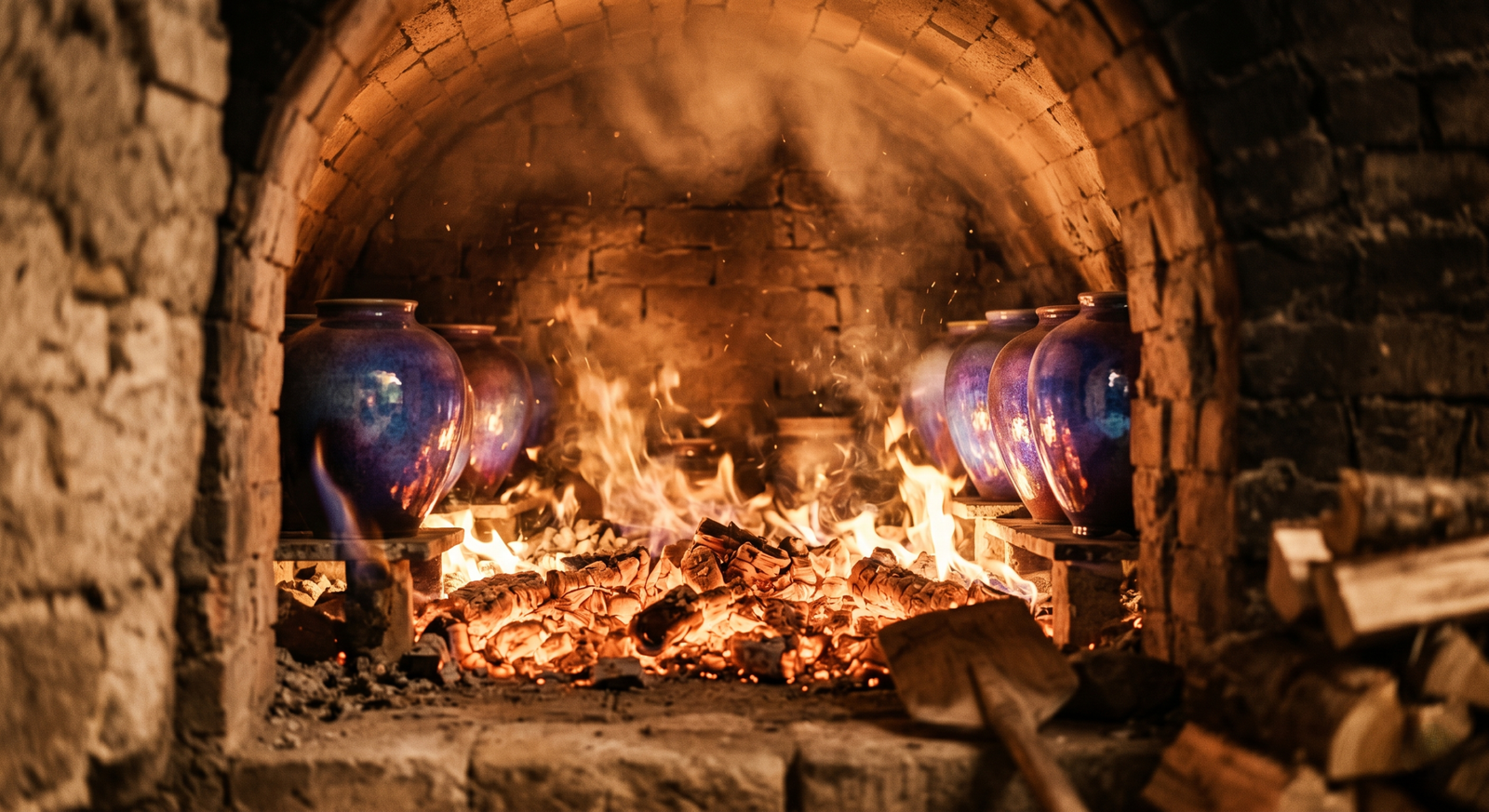
If the body is the skeleton of porcelain, then the glaze is its skin. Glaze is essentially a glassy layer covering the surface of the body, mainly composed of quartz, feldspar, and lime. During high-temperature firing, these minerals undergo complex chemical reactions to form a smooth, impermeable protective layer.
Echoes of History: Technological Hegemony on the Silk Road
The history of porcelain dissemination is, in fact, a history of global technological exchange and gaming.
1. The Carrier of the Silk Road
Since the Tang Dynasty (618–907 AD), Chinese porcelain has been sold overseas via the land and maritime Silk Roads. In the Islamic world, the cobalt material (Sumali Blue) for blue-and-white porcelain came from Persia. In the hands of Chinese craftsmen, it combined with local Kaolin to create the world-famous Yuan Blue-and-White Porcelain (1271–1368 AD). This cross-cultural fusion of raw materials witnessed early globalized technological collaboration [3].
2. Europe’s Dream of “White Gold”
Before the 18th century, Europeans could not crack the manufacturing code of porcelain for a long time and had to rely on expensive imports. In 1712, French missionary François Xavier d’Entrecolles stayed in Jingdezhen for many years and finally sent the “industrial secrets”—including Kaolin ratios, glaze modulation, and kiln temperature control—back to Europe [4].
- The Birth of Bone China: Although they obtained the formula, Europe lacked high-quality Kaolin. The British turned to their abundant local animal bone resources and invented Bone China in the late 18th century. Bone China incorporates up to 45% or more cow bone ash, giving it a unique milky white color and extremely high translucency, becoming another peak in the history of Western porcelain [5].
The Peak of Craftsmanship: Kiln Transmutation and Redox Reactions
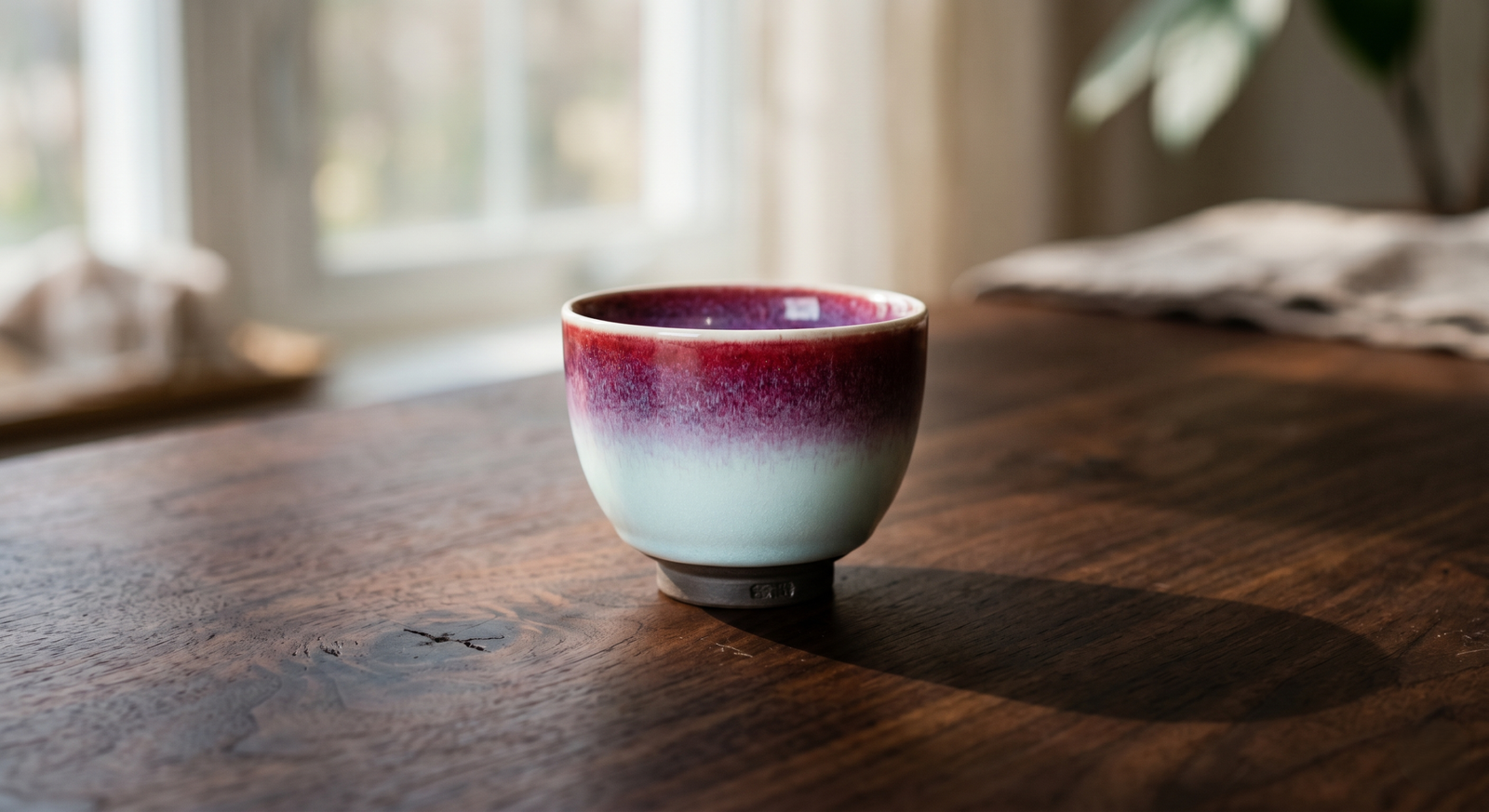
In the history of Chinese ceramics, Jun Ware is famous for its kiln transmutation phenomenon of “one color entering the kiln, ten thousand colors exiting the kiln.” This is not metaphysics but a rigorous chemical process.
1. The Game of Oxidation and Reduction
The color change of Jun Ware mainly depends on the atmosphere inside the kiln (oxidizing or reducing) and the valence changes of trace metal elements (such as iron and copper) in the glaze.
- Reduction Reaction: In a high-temperature (1280–1320°C) and oxygen-deficient environment, ferric oxide (Fe₂O₃, red) in the glaze is reduced to ferrous oxide (FeO, cyan), thus presenting a deep blue-purple tone [6].
- Liquid-Liquid Phase Separation: Modern scientific research has found that nano-scale liquid-liquid phase separation structures exist in the glaze of Jun Ware. Light scatters between these tiny particles (Rayleigh scattering), producing a sky-blue tone, which is consistent with the principle of why the sky appears blue in nature [7].
2. The Formation of Earthworm Mud Tracks
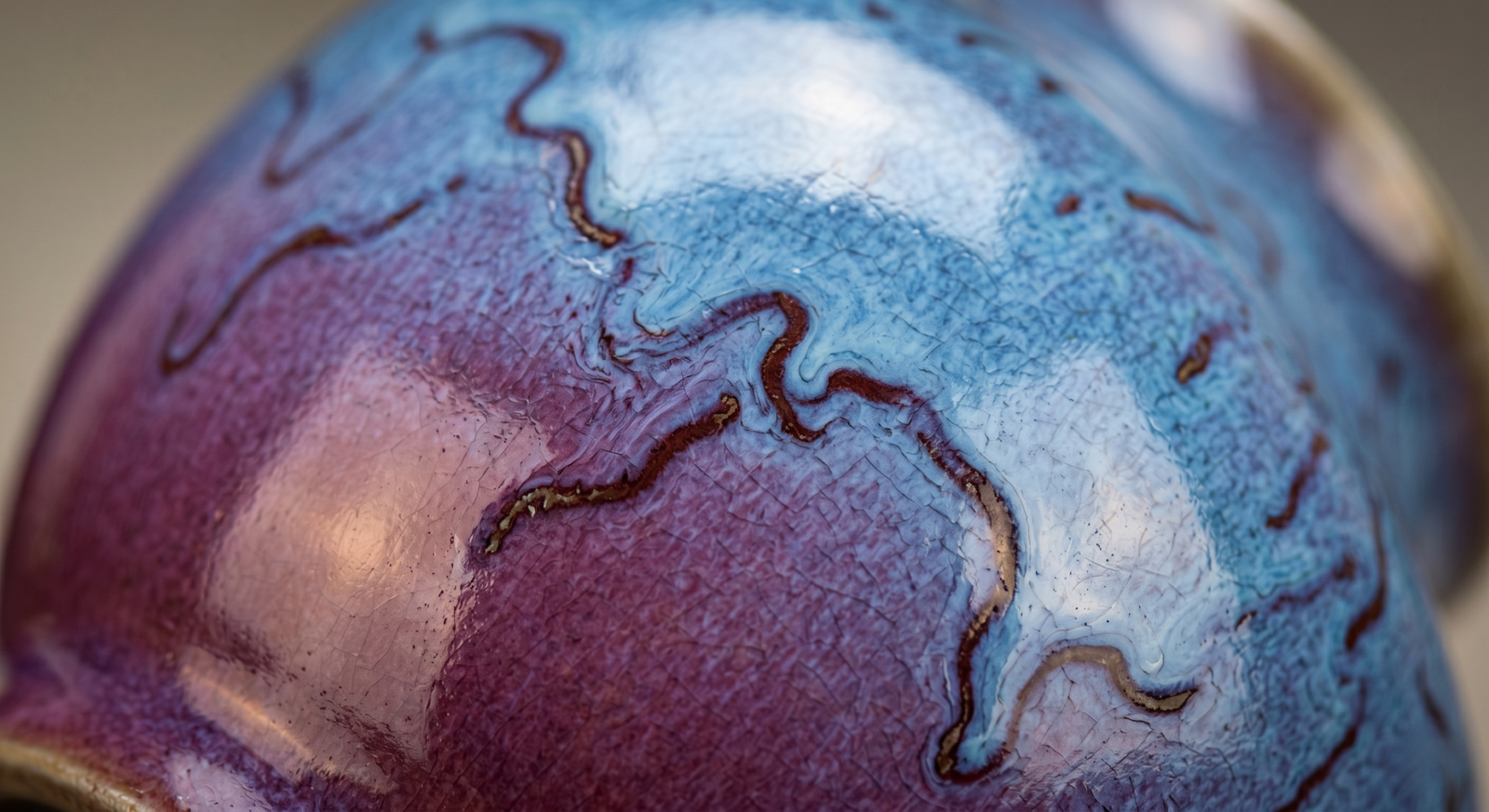
The common “Earthworm Mud Tracks” on the surface of Jun Ware are formed because the glaze layer cracks during the drying or initial firing stage, and then the low-viscosity glaze flows again at high temperatures to fill the gaps. This texture, which once seemed like a flaw, has now become an important mark for authenticating Jun Ware [8].
Conclusion: The Resonance of Tradition and Modernity
From the minimalist aesthetics of the Song Dynasty (960–1279 AD) to the intricate craftsmanship of the Qing Dynasty, and then to modern technological exploration of nano-glazes, porcelain has always been a medium for dialogue between human wisdom and natural elements. Today, when we use a coffee cup or a teapot, we are not just enjoying a drink but touching a scientific epic that spans a millennium.